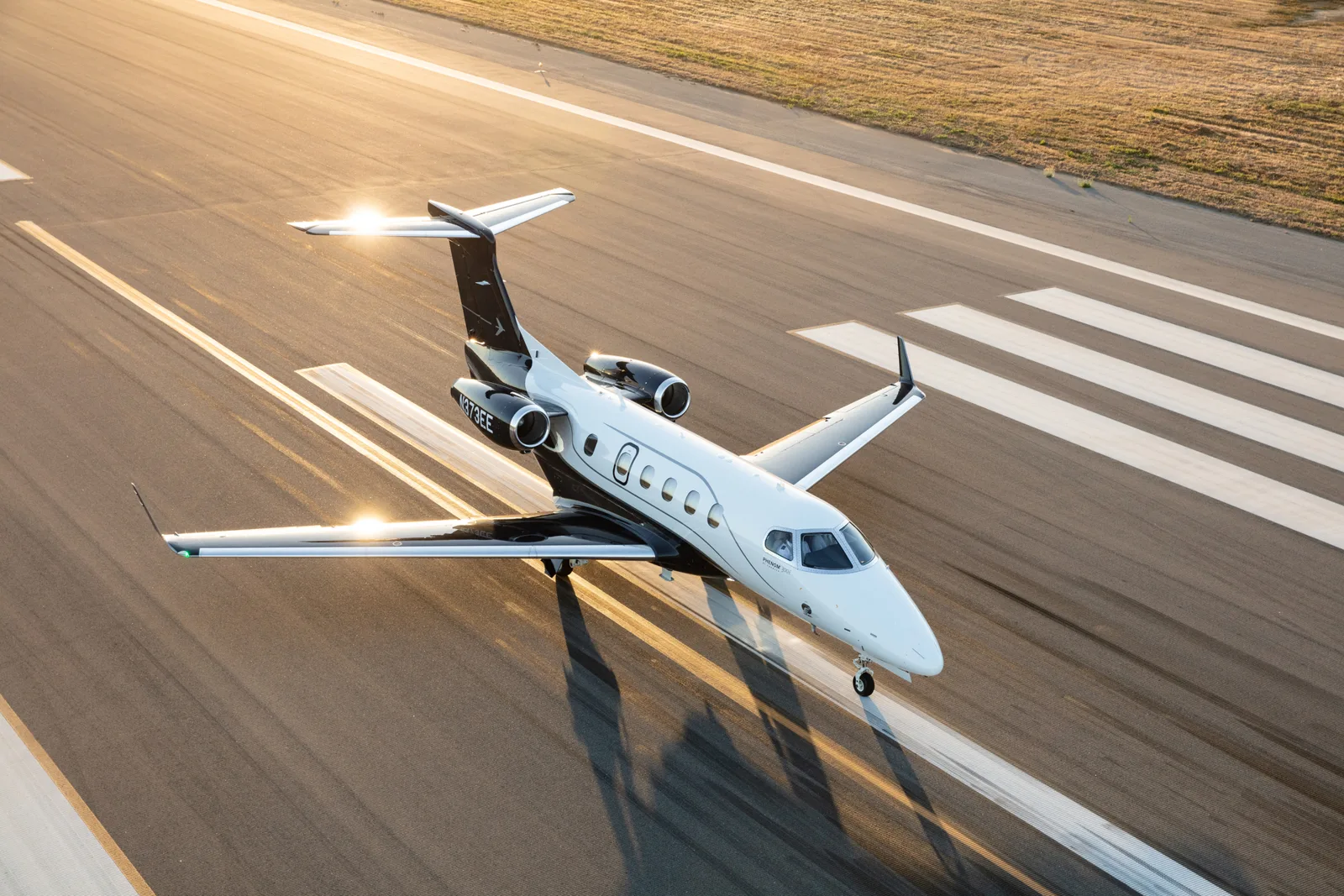
The first time most people fly private, the strangest part is how little there is to do. You drive to a small terminal, say hello, and walk to the plane. This guide walks through the whole day so nothing surprises you, plus the few rules that do still apply.
Before the flight: what you send us
Once your flight is confirmed, the operator needs a passenger manifest: the full name of each traveler exactly as it appears on their ID, date of birth, and, for international trips, passport details. Tell us early about anything unusual: a pet, skis or golf clubs, a car seat, special food, or a passenger who needs help boarding. Each of these is easy to handle when the crew knows in advance.
You'll also get the departure terminal's address. Private flights don't leave from the main airline terminal; they leave from an FBO.
What is an FBO?
An FBO (fixed-base operator) is the private terminal at an airport. Think of a quiet lounge with a reception desk, coffee, restrooms and a door straight onto the ramp. There is no check-in counter line, no gate and usually no TSA checkpoint. Your car can often drive right up to the building, and at many FBOs the staff will carry your bags out to the aircraft.
Big airports often have several FBOs, so always use the exact name and address we send you, not just the airport name.
What ID do you need in 2026?
This is the one rule people get wrong, so here it is plainly:
- Since May 7, 2025, adults on most charter flights need REAL ID–compliant identification. Charters on jets over 12,500 lb (many light jets and everything bigger) fly under a TSA program called Twelve-Five, which follows the same REAL ID rule as airlines.
- A passport, passport card, Global Entry/NEXUS/SENTRI card, US military ID or green card all count.
- TSA's new ConfirmID option (pay $45 to verify your identity without REAL ID) is currently not available on these charter flights (as of 2026), so don't count on it.
- Children under 18 are exempt.
- For international flights, everyone needs a valid passport regardless.
Easiest rule: bring your passport. It works for every flight, domestic or international, and no one ever has to check whether your driver's license has the star.
When to arrive
There is no long line to stand in, but the crew still needs time to check IDs, load bags and do the paperwork. A good rule:
- Domestic flights: 15–30 minutes before departure (30–45 if it's your first time and you'd like to look around).
- International flights: 45–60 minutes, because passports are checked and customs paperwork is filed.
- Add about 15 minutes if you're bringing golf clubs, skis or anything bulky.
Unlike an airline, the jet won't push back without you if you're five minutes late, but the crew works to a planned slot, and long delays can run into crew duty limits or extra fees.
Security: what's different
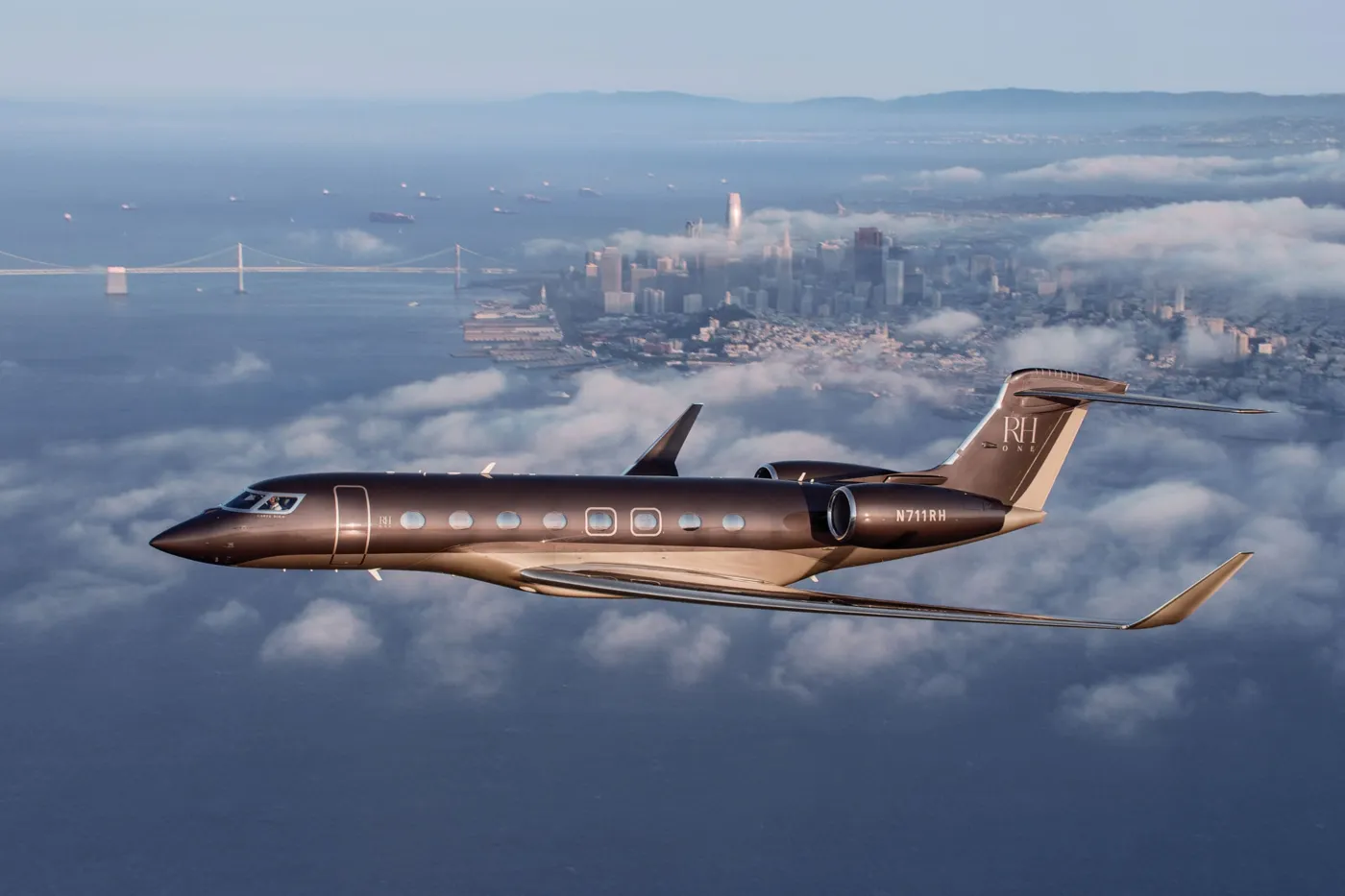
On most charter jets there's no airport-style checkpoint: the crew checks your ID against the manifest and that's it. The exception is very large aircraft: charters on jets over about 100,000 lb maximum takeoff weight (which includes some ultra-long-range jets like the Gulfstream G700 and Bombardier Global 7500) or with 61+ seats screen every passenger and carry-on bag before boarding.
That doesn't mean anything goes. Hazardous-materials rules still apply to all flights (no fuel, fireworks or similar), and firearms must be declared in advance and handled the operator's way. If you're unsure about something in your bag, ask before the day of the flight.
How much luggage fits
Luggage is the most common surprise on a first flight. Small jets have small baggage holds, and space is measured in cubic feet, not number of suitcases. Approximate capacity by class:
| Jet class | Baggage space | What that means in practice |
|---|---|---|
| Light jet | ~30–55 cu ft | About one medium bag per passenger |
| Midsize | ~50–80 cu ft | One bag each, plus a small carry-on |
| Super-midsize | ~80–120 cu ft | Comfortable for most trips; golf bags often fit |
| Heavy | ~100–200 cu ft | Large suitcases, skis, golf clubs for a group |
| Ultra-long-range | ~150–250 cu ft | Long trips with lots of luggage |
Figures vary by aircraft model and even by individual plane, so always tell us your bag count and sizes.
Pack soft bags. Duffels and soft-sided suitcases squeeze into curved baggage holds; big hard-shell cases often don't. For skis and golf clubs, soft travel covers fit far better than hard cases.
On board: food, Wi-Fi and the lavatory
What's on board depends mostly on the jet's size:
- Very light jets may have only a basic, curtained lavatory, and often no Wi-Fi.
- Light jets usually have a small enclosed lavatory, snacks and cold drinks, and sometimes Wi-Fi.
- Midsize jets have a proper enclosed lavatory with a sink and can warm meals.
- Super-midsize and heavy jets have a galley for hot meals, more reliable Wi-Fi and, on heavies, often a flight attendant.
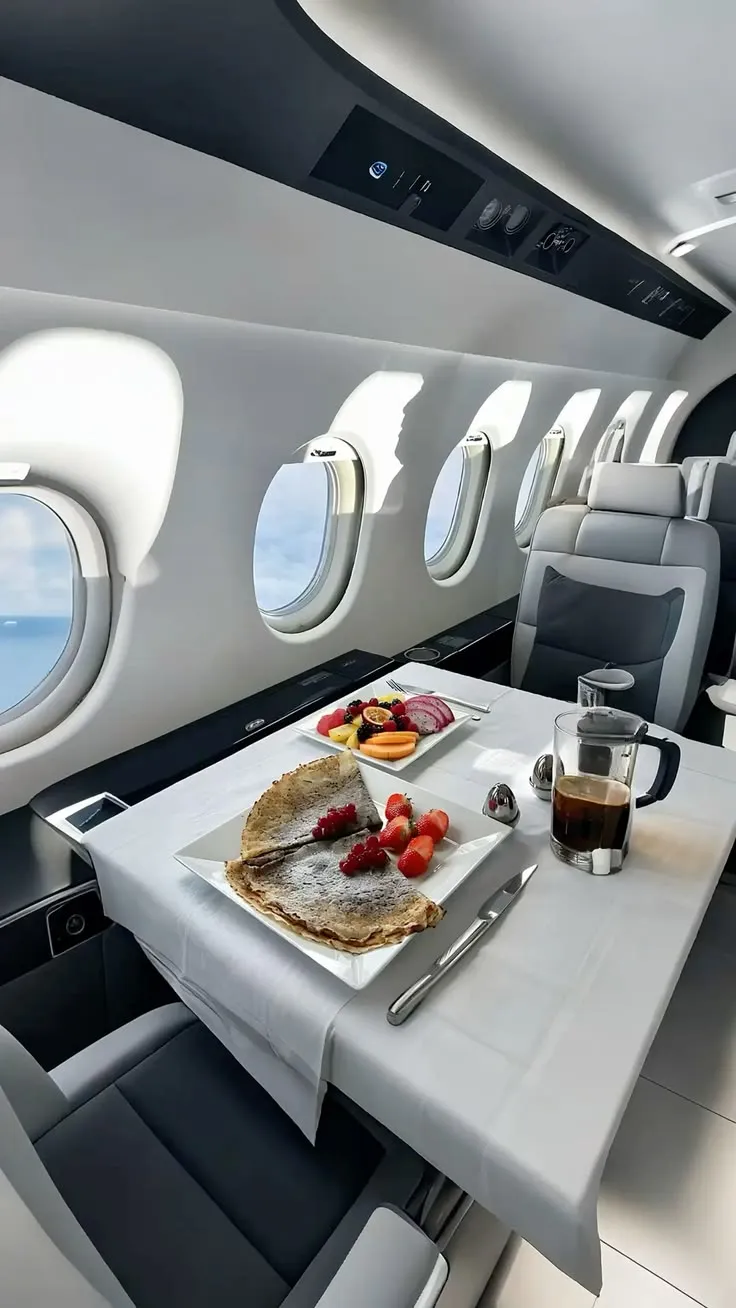
Catering is ordered in advance: anything from sandwiches to a restaurant meal. Let us know two or three days ahead so the operator can arrange it. If Wi-Fi matters for work, ask us to confirm it on your specific aircraft.
After you land
There's no baggage claim. The crew unloads your bags, and if you've arranged a car it can usually meet you at the FBO or right by the plane. On international arrivals into the US, customs is handled at a customs-equipped FBO or airport; it's typically quick because you're the only people on the flight.
Questions & answers
Do I need to go through TSA for a private jet charter?
On most charter jets there is no TSA checkpoint; the crew checks your ID against the passenger list. Charters on very large jets (over about 100,000 lb, including some ultra-long-range models) screen passengers and carry-on bags. You still need REAL ID–compliant ID (or a passport) on most charters.
Can I bring liquids on a private jet?
On most charters there's no checkpoint enforcing the 3-1-1 liquids rule, but hazardous-materials rules still apply, and the operator has the final say. Ask us if you're carrying anything unusual.
How early should I arrive for a private flight?
About 15–30 minutes before departure for domestic flights and 45–60 minutes for international ones. Allow a little extra for bulky items like golf clubs or skis.
Is there a bathroom on a private jet?
Almost always, but very light jets may only have a basic one behind a curtain. Midsize jets and larger have a fully enclosed lavatory with a sink.
How many bags can I bring?
It depends on the jet. As a rough guide, plan on one medium soft bag per person on a light jet; bigger jets carry more. Tell us your bags in advance so we pick an aircraft that fits them.